Tiny Forest and Hugels

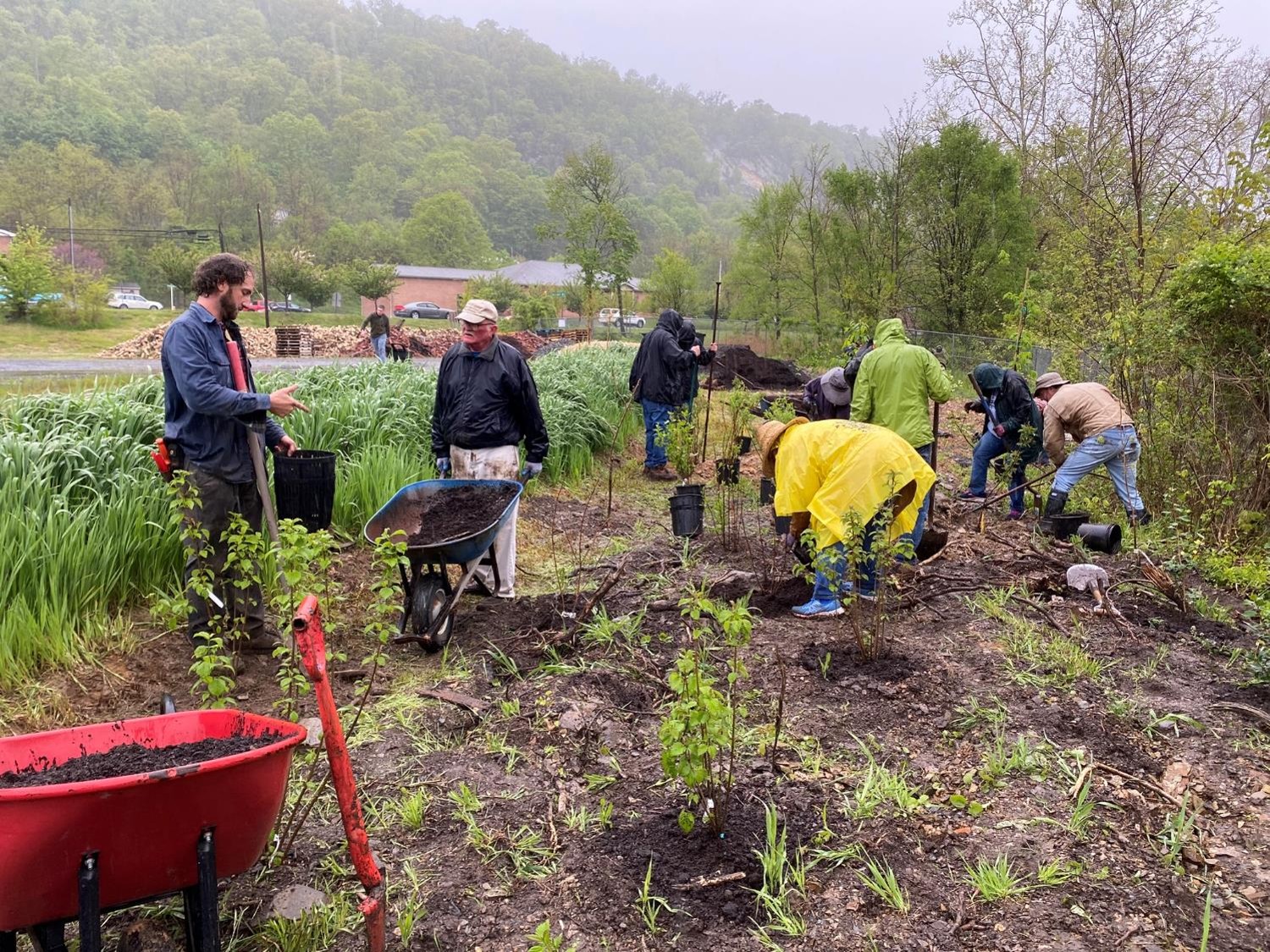
WSWA partnered with the Bath Tree Board to support the remediation of the Berkeley Springs Depot by planting the Gale Foulds Tiny Forest. A tiny forest is a dense, fast-growing, miniature native forest that mimics the structure and function of a natural forest ecosystem.
Key Features:
- The tiny forest was planted with 35 different species on 3,500 square feet to serve as a buffer to the adjacent property and to capture storm runoff from the former rail yard.
- It will grow about 10 times faster than a conventional forest and become self-sustaining within a few years, requiring minimal maintenance after establishment.
- The mix of trees and shrubs was selected to promote biodiversity by attracting birds, pollinators, and beneficial soil organisms.
- The area was designed to enhance climate resilience and increase carbon sequestration.
- Along with the wildflowers planted on the adjacent hugels (constructed mounds composed of logs and other organic material), the tiny forest creates a natural solution for stormwater runoff control.
Tiny forests are used in urban settings to reconnect people with nature, combat urban heat, and restore degraded soils, especially in small or otherwise unused parcels of land—like along roadsides, at schools, or beside historic buildings like the Berkeley Springs Depot.
The work we do is meaningful
Stay informed about our efforts to protect and restore the Warm Springs Run watershed. Sign up for our newsletter to receive the latest news, events, and ways you can get involved.
Read Our News and Articles
From the August 5, 2026 issue of The Morgan Messenger
Warm Springs watershed group gets $75K grant to restore native trees, shrubs along bypass Continuing its…
Sinuosity: A Simple Sign of Stream Health
If you want to know how a stream is doing, don’t just look at the water…
The Bypass and its Unnatural Shale Barrens
What’s Going on with Those Bare, Rocky Slopes Along the Bypass? If you’ve driven along the…